
The Follow-Up Sequence That Turns Cold Roofing Leads Into Booked Jobs
Most roofing companies treat a lead as “dead” after one or two unanswered calls. In reality, a huge share of eventual customers don’t respond until the third, fourth, or fifth touch — they were just busy, distracted, or not ready yet the first time you reached out.
The leads aren’t dead. The follow-up just stopped too early.
Why One Call Isn’t Enough
A homeowner who fills out a roofing quote form is often doing early research, not making an urgent decision — unless it’s storm damage. If your process is “call once, leave a voicemail, move on,” you’re filtering out everyone who needed a second nudge, which is most people.
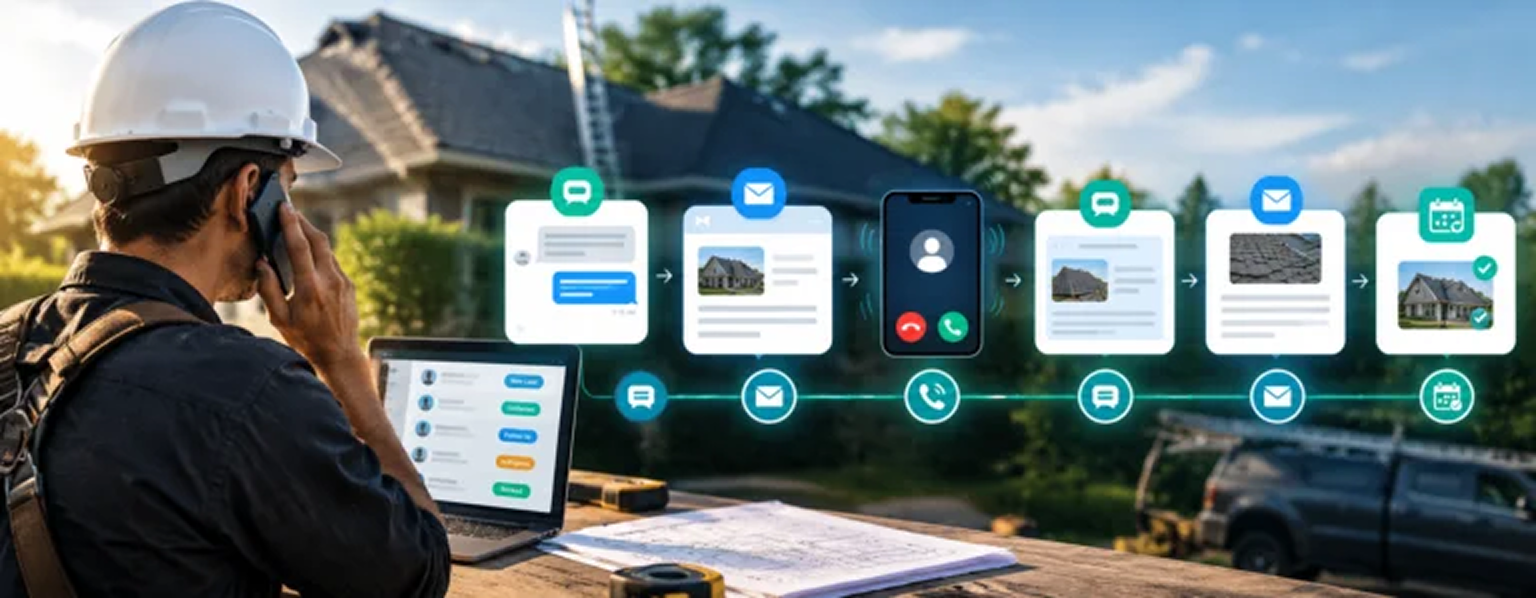
The Sequence That Actually Works
This isn’t complicated. It’s just consistent, and it uses more than one channel:
Day 0 (within 5 minutes):
- Instant text: “Thanks for reaching out about your roof — when’s a good time for a quick call?”
- Instant email confirmation with what to expect next
Day 0 (if no response in 30 min):
- Phone call attempt
Day 1:
- Second call attempt at a different time of day
- Follow-up text if call goes unanswered
Day 3:
- Value-add touch: a text or email with something useful — “Here’s what to look for after a storm” — not just “checking in”
Day 7:
- Final direct outreach: “Still want to get you a quote — let us know if now’s not the right time”
Day 14 (if still no response):
- Move to a low-frequency nurture list (monthly check-ins, seasonal reminders) instead of dropping the lead entirely
Why Multi-Channel Matters
Some people never answer calls from unknown numbers but will respond to a text in minutes. Others ignore texts but pick up a call. Running both channels in the same sequence catches people who’d otherwise fall through a single-channel process.
Why This Has to Be Automated, Not Manual
A five-touch sequence across 14 days, run manually, requires someone remembering to follow up on leads from a week and a half ago — while also handling today’s new leads. That’s exactly the kind of task that quietly stops happening the busier your team gets.
Automated sequences run the same way every time, for every lead, regardless of how busy your office is that week. The follow-up doesn’t depend on anyone’s memory.
What This Is Worth in Real Numbers
If your current process only reaches leads once or twice and you’re closing, say, 20% of contacted leads — extending real follow-up to 5 touches over two weeks typically recovers a meaningful share of leads that would’ve otherwise gone completely cold. That’s revenue you already paid to generate through ads or SEO, sitting unclaimed in old form submissions.
The Bottom Line
Your close rate isn’t just about the pitch. It’s about how many times you actually reach the lead before giving up. Most roofing companies give up too early, not because the lead was bad, but because the process wasn’t built to last more than two touches.
Want us to show you what your current follow-up gap is actually costing you? Get a free audit and we’ll break it down.